Our Team
Deep expertise in policy, technology, and community engagement
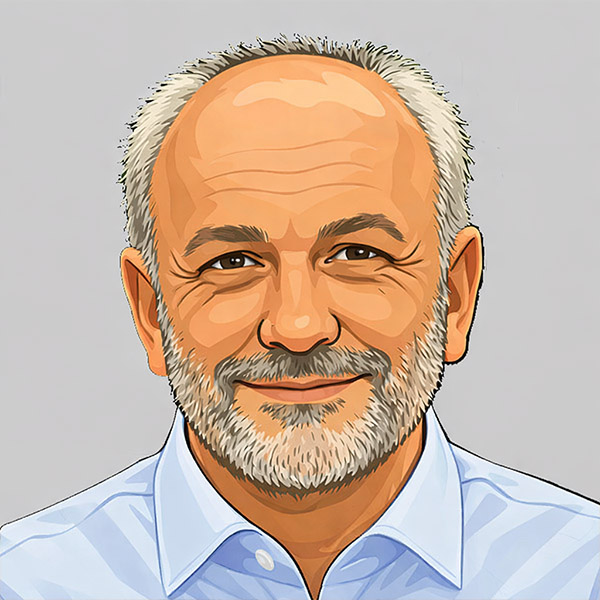
Dr Kenia Parsons
Senior Social Policy Specialist — Managing DirectorSenior international development professional with over 15 years of global experience in social protection, jobs, and public policy across Africa, Latin America, and the Pacific.
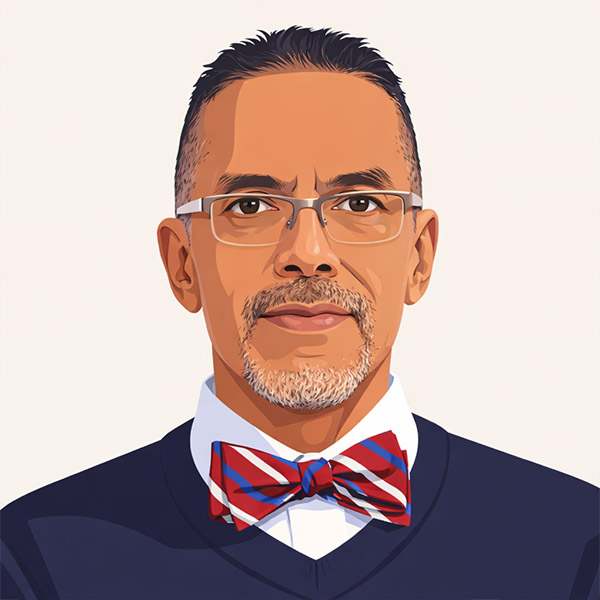
Iulian Alexandru Barsan
Senior Project and Financial Management Specialist — Operations and Growth DirectorProject and financial management professional and social protection & labor specialist with 20+ years of experience across the public sector and international development.
Balazs Kadar
Senior Economist — Finance DirectorEconomist with 20+ years of experience at multinational and supranational organizations, specializing in labor markets, social protection, financial inclusion, and digital payments.
Walid Madhoun
Senior Performance, Transformation and AI Specialist — Strategy DirectorSenior international consultant specializing in results-based management, M&E, and institutional performance improvement, with three decades of experience and over 70 projects across roughly 40 countries.
Dr Zlatan Šabić
Senior Digital Transformation and Information Systems Specialist — Innovation and Transformation DirectorGlobally recognized human development public information systems expert with strategic guidance and technical expertise provided to over 30 countries across the globe.
Malakai Kaufusi
Senior Social Development & Safeguards SpecialistSenior social development professional and safeguards specialist with 20+ years across the public sector and international development, including 15 years dedicated to the Pacific region.
Pantaleo Creti
Senior Social Protection and Employment Systems SpecialistSenior social protection and employment systems expert with 25+ years designing, delivering, and evaluating national safety nets, social registries, and youth employment programs across Africa, Asia, the Pacific, the Middle East, and Latin America.
Advisory Board
Senior advisors who provide strategic guidance on policy design, digital transformation, and social sector reform.
Sandor Karacsony
Senior Economist and Systems Strategist AdvisorSenior economist with 20+ years of experience at the World Bank, leading social protection, employment, and human development programs across the Pacific, East Asia, Europe, and the Middle East.
Dr Pavlos Kavouras
UNESCO Chair & Senior Cultural Anthropology AdvisorCultural anthropologist and ethnomusicology expert with 30+ years bridging humanities, arts, and social policy. Professor Emeritus at the National and Kapodistrian University of Athens and UNESCO Chair on the Anthropology of Traditional Music.
Dr Giannis Tzimas
Senior Digital Transformation & AI AdvisorSenior digital transformation and information systems expert with over 20 years of international experience at the intersection of social protection, labor markets, education, and public-sector modernization.
Ready to Collaborate?
Get in touch to explore how we can work together on inclusive policy, ethical AI, and social innovation.
Get in TouchProject and financial management professional and social protection & labor specialist with 20+ years of experience across the public sector and international development. He spent 15 years at Romania's Ministry of National Education, leading financial management and delivery for EU-funded institutional reform and human capital projects, as well as education infrastructure programs financed by IFIs.
Since 2017, he has worked with the World Bank, supporting coordination of multi-country work programs, managing large teams of experts and consultants, strengthening delivery systems, and supporting clients through evidence-based analytics and operational implementation. Over the last five years, he has supported Pacific Island Country teams by delivering labor market and gender assessments, supporting employment operations and adaptive social protection systems, and working on the ground through regular field missions.
Countries Worked
Romania; Federated States of Micronesia (FSM); Kiribati; Fiji; Tonga; plus broader Europe & Central Asia and Pacific regional support.
Core Areas of Expertise
Economist with a strong background in corporate and public finances and policies thanks to 20+ years of professional experience at multinational and supranational organizations, large exchange-listed and state-owned enterprises and central government.
In his current role at the World Bank as an international consultant, he has been involved in various labor market and social protection related projects, with recent working experience from Pacific Island Countries and Niger. His main tasks include assessment of labor markets (with a special focus on women and youth), financial inclusion and digital payments through quantitative and qualitative analysis. He has designed and implemented several complementing qualitative researches and provided technical assistance and training in developing and implementing various government-owned IT systems including social registries and public employment portals.
Countries Worked
Tonga, Kiribati, Federated States of Micronesia, Fiji, Marshall Islands, Niger, Saudi Arabia, Hungary (with broader engagement across the Pacific).
Core Areas of Expertise
Walid Madhoun is a senior international consultant specializing in results-based management, monitoring and evaluation, and institutional performance improvement, with more than three decades of experience and over 70 projects delivered across roughly 40 countries in the Pacific, Europe, the Middle East, Asia, and Africa. He currently serves as a senior staff consultant with the World Bank and the Asian Development Bank, leading and supporting complex operations in sectors such as education, skills development and TVET, employment services, social protection, justice and legal reform, and public sector reform and performance improvement.
His work focuses on designing and implementing projects and programs, results-based frameworks and methodologies, monitoring and evaluation systems, and business processes that strengthen government and institutional performance. He has led the design of operational processes, impact and process evaluations, and the design and development of performance frameworks for ministries of labor, justice, and education, as well as large-scale social protection and skills programs. He has acted as an AI strategy and solution architect, integrating data science and AI-driven automation into public sector management, project management, and analysis.
Walid is recognized for building institutional capacity through training, facilitation, and advisory support to ministries, multilateral, bilateral, and national private and public agencies.
Walid holds a Master of Laws (LL.M.), Postgraduate Diploma, and Postgraduate Certificate in Laws from the University of London, complemented by graduate-level studies in public administration at Carleton University and a Bachelor of Arts from the University of Western Ontario. He has completed extensive training in advanced results-based management, monitoring and evaluation, big data, AI and data science, and project management, and is fluent in English, French, and Arabic. He has received multiple distinctions, including World Bank performance awards in 2022 and 2024 and recognition by the European Commission's Crystal Scales of Justice.
Countries Worked
Azerbaijan, Laos, Russian Federation, Bangladesh, Latvia, Slovakia, Botswana, Lebanon, Tajikistan, Bulgaria, Malawi, Thailand, Canada, Malaysia, Tuvalu, Egypt, Marshall Islands (Republic of), Ukraine, India, Micronesia (Federated States), Uganda, Iraq, Pakistan, Viet Nam, Jamaica & West Indies, Palestine, West Africa (Francophone), Jordan, Philippines, Yemen, Kuwait, Romania.
Core Areas of Expertise
Senior international development professional with over 15 years of global experience in social protection, jobs, and public policy across Africa, Latin America, and the Pacific. She has worked at various multilateral development Banks and is currently an Adjunct Lecturer at the University of New South Wales, Australia.
Her work focuses on adaptive and shock-responsive social protection systems, digital transformation, social registries, labor mobility, employability programs, and gender-responsive policy design. She has led complex investment operations, technical assistance programs, and multi-donor trust funds, working closely with governments and development partners.
She holds a PhD from the London School of Economics, an MPhil from the University of Cambridge, and a BA from the University of Brasília.
Countries Worked
Australia, Brazil, Fiji, Kiribati, Papua New Guinea, Samoa, Solomon Islands, Tonga, Vanuatu, Tunisia, Uganda, Mozambique, Niger, United States, United Kingdom (with broader engagement across Africa, Latin America, and the Pacific).
Core Areas of Expertise
Senior economist with more than 20 years of global operational and analytical experience across social protection, employment, social inclusion, and human development. His regional expertise spans West Africa and the Sahel, Pacific Island countries, Southeast Asia, and Central and Eastern Europe, with particular focus on adaptive social protection systems, digital delivery systems, foundational ID and social registry infrastructure, and the social and economic inclusion of vulnerable populations, including Roma communities across Central and Eastern Europe.
At the World Bank, he has led investment operations, technical assistance, and policy dialogue across multiple regions. His recent work in West Africa has focused on strengthening adaptive social protection systems, shock-responsive delivery mechanisms, digital information systems, and interoperability frameworks in countries including Niger, Mali, and Côte d'Ivoire, with broader engagement across the Sahel region. He has supported the development of unified social registries, digital identification and beneficiary management systems, and scalable platforms for social assistance, labor market programs, and disaster response. His operational portfolio has also included cash transfer and delivery system reforms with strong adaptive social protection and gender inclusion components in Fiji and Kiribati, cross-sectoral human development operations in technical-vocational education and early childhood development across the Pacific, and the development of AI-assisted employment matching platforms for vulnerable jobseekers in Pacific Island countries.
Earlier in his career, he worked extensively on Roma inclusion across Central and Eastern Europe, supporting analytical and policy work on employment, social inclusion, education, and access to services for marginalized Roma communities in partnership with governments, civil society organizations, and international institutions. His work included regional policy dialogue, program design, and research focused on labor market integration, poverty reduction, and inclusive public service delivery.
Previously, he served as a senior advisor to the World Bank's Executive Board, supporting Austrian and Belgian Executive Directors on institutional governance, operations, and strategic policy issues. He also worked with Open Society Foundations on social inclusion and employment policies for disadvantaged groups in Central and Eastern Europe, and held government and private sector positions in Hungary, including roles at the Prime Minister's Office and the Ministry of Finance.
He holds an MSc in Economics from the University of Pécs with concentrations in management consulting and decision science, an Economists' Legal Certificate in labor law, and postgraduate training in European banking. He speaks seven languages and is the author of numerous World Bank reports and policy briefs on social protection, labor markets, adaptive systems, inclusive growth, and Roma inclusion.
Countries Worked
Niger, Mali, Côte d'Ivoire, Fiji, Kiribati, Federated States of Micronesia, Tonga, Marshall Islands, Vietnam, Azerbaijan, Bulgaria, Hungary, Romania, Slovakia, Saudi Arabia (with broader engagement across the Sahel, Europe & Central Asia, East Asia & Pacific, GCC countries, and the Western Balkans).
Core Areas of Expertise
Dr Pavlos Kavouras is a senior cultural anthropologist and ethnomusicology expert with 30+ years of international academic, research, and advisory experience. Professor Emeritus at the National and Kapodistrian University of Athens and UNESCO Chair on the Anthropology of Traditional Music, his mandate focuses on Sub-Saharan Africa, cultural heritage, and gender relations.
An internationally recognized scholar and advisor working at the intersection of culture, society, and human development, his work combines anthropology, ethnomusicology, philosophy, and the humanities to address complex social challenges through culturally grounded, human-centered approaches. As UNESCO Chair, his work aligns with global priorities on intangible cultural heritage, gender equity, and the Sustainable Development Goals, with particular emphasis on Sub-Saharan contexts and transregional collaboration.
He is the originator of a Triadic Theory and Methodology grounded in Hermeneutics, Phenomenology, and Reflexivity — a transdisciplinary framework developed over decades of research and application across the humanities, philosophy, arts, and social policy. The model supports integrated cultural and social analysis across disciplines, policy-relevant insight grounded in lived experience, transformative education and knowledge production, and the empowerment of individuals and communities through reflective and creative practice. It has been applied in research, advisory, and community-based initiatives to foster more humane, inclusive, and context-sensitive approaches to development and cultural policy.
Pavlos founded and directed the Ethnomusicology and Cultural Anthropology Laboratory (2007–2022), formerly headed the Faculty of Music Studies at the National and Kapodistrian University of Athens, and served as Visiting Professor at UCLA. He has led arts-based social protection and anti-xenophobia initiatives that use culture as a tool for inclusion and civic engagement, and has developed participatory ethnographic projects empowering migrant communities and documenting everyday life, aspirations, and identity formation. He is the author of major works including Anthropology of Music, Trickster and Cain, and Music as Art, Culture and Ideology, with extensive international publications; his forthcoming book, Resonant Being, advances a comprehensive framework linking consciousness, culture, and sound.
Countries Worked
Greece, the United States, Romania, Egypt, and India (with broader engagement across Sub-Saharan Africa, Europe, and international UNESCO and academic networks).
Core Areas of Expertise
Dr. Giannis (Ioannis) Tzimas is a senior digital transformation and information systems expert with over 20 years of international experience at the intersection of social protection, labor markets, education, and public-sector modernization. He is a University Professor in the Department of Electrical and Computer Engineering at the University of the Peloponnese (Greece).
He has extensive experience advising governments and development partners on the design and implementation of large-scale digital ecosystems, including social registries, public employment service platforms, education information systems, and data-driven decision-support tools.
He currently works as an international consultant, supporting projects across Europe and Central Asia, Africa, the Pacific, and the Caribbean, with a focus on digital service delivery, interoperability and data governance, and the application of AI to social protection, labor market, disaster risk management, and education. His work emphasizes citizen-centered digital transformation, institutional strengthening, and resilient, inclusive systems design.
He has also led and contributed to numerous investment operations, technical assistance programs, and EU-funded research projects. He holds a PhD in Computer Engineering and Informatics from the University of Patras, Greece.
Countries Worked
Romania, Ukraine, Moldova, Albania, North Macedonia, Greece, Cyprus, Switzerland, Kenya, Mozambique, Niger, China, Philippines, Tonga, Samoa, Fiji, Vanuatu, Kiribati, Micronesia (Federated States), Marshall Islands (Republic of), Saint Lucia, St. Vincent and the Grenadines (with broader engagement across Europe, Africa, East Asia, the Caribbean, and the Pacific).
Core Areas of Expertise
Dr Zlatan Šabić is a globally recognized human development public information systems expert. He has provided strategic guidance and technical expertise to over 30 countries across the globe. His expertise spans the full spectrum of digital transformation, from policy dialogue and strategic planning to system architecture design and capacity building.
Zlatan was one of the South-East Europe regional leaders in introducing the eGovernment concept for public administration reforms (co-author of SEE eAgenda and eAgenda+, regional information society strategic development protocols). Previously holding the position of Senior Public Information Systems Specialist at the World Bank from 2013 to 2025, he co-led the development of the World Bank's global digital health program, co-authored key reports including "Digital-In-Health: Unlocking the Value for Everyone," and led the development of the World Bank Digital Health Learning Framework.
He possesses substantive knowledge and experience in public sector development, including data management and deep insight analytics (including BI and AI applications) for policy making, strategic planning, and investment planning; business processes restructuring; public administration reform, open government/open data, public service improvement; capacity building and public information systems implementation. His work focuses on critical national information systems in health, social protection, and education sectors, as well as digital governance.
Dr. Šabić earned his Ph.D. in Technical Sciences (Information Systems Development Methodologies) from the University of Sarajevo in 2009. His academic background includes over 20 years of university teaching at the University of Sarajevo, where he served as Associate Professor. A Fulbright Alumnus and member of ACM and HIMSS, he has authored numerous publications and continues to contribute to global digital health initiatives through training programs, policy development, and technical assistance to governments worldwide.
Countries Worked
Albania, Armenia, Argentina, Azerbaijan, Bangladesh, Belarus, Bosnia and Herzegovina, China, Croatia, Egypt, Greece, India, Jordan, Kazakhstan, Kenya, Kirgizstan, Kosovo, Montenegro, Palestine, Peru, Philippines, Romania, Russia, Saint Vincent and Grenadines, Saint Lucia, Senegal, Serbia, Tajikistan, Türkiye, Ukraine, Uzbekistan.
Core Areas of Expertise
Malakai Kaufusi is a senior Social Development professional and Safeguards Specialist with over 20 years of experience across the public sector and international development, including 15 years dedicated to the Pacific region. He spent a decade leading technical missions, establishing national social service divisions, developing disability inclusion policies, and managing ESHS compliance across major infrastructure projects.
Since 2016, he has worked with the World Bank and the Asian Development Bank (ADB), supporting the coordination of multi-country work programs, operationalizing social risk and safeguard frameworks, and supporting clients through evidence-based analytics and operational implementation in fragile or climate-vulnerable contexts. Over the last five years, he has supported Pacific Island Country teams by delivering technical safeguards, supporting adaptive social protection systems, and working on the ground through regular field missions.
Countries Worked
Tonga, Solomon Islands, Samoa, Kiribati, Marshall Islands, Cook Islands, Tuvalu, Fiji, Vanuatu, and the USA.
Core Areas of Expertise
Social Protection & Disability Inclusion: Design of conditional cash transfers, national social registries, and inclusive education policies.
Social Safeguards & Risk Management: Expert implementation of the ADB Safeguard Policy Statement and World Bank Environmental and Social Framework (ESF).
Environmental and Social Instruments: Preparation and monitoring of Environmental and Social Impact Assessments (ESIA), Stakeholder Engagement Plans (SEP), and Labor Management Procedures (LMP).
Grievance Redressal Mechanisms (GRM): Designing and managing community-level and worker-level grievance systems for high-stakes infrastructure projects.
Adaptive Social Protection: Developing disaster-responsive social service systems and climate-resilient community interventions.
Gender & Social Inclusion (GESI): Implementation of Gender Action Plans (GAP) and Sexual Exploitation, Abuse, and Harassment (SEAH) prevention protocols.
Pantaleo Creti is a senior social protection and employment systems expert with over 25 years of experience supporting the establishment and strengthening of national social protection and employment systems across more than 25 countries, with deep engagement in Sub-Saharan Africa. His work spans shock-responsive and adaptive social protection, employment policy ecosystem mapping, market and labor analysis, and end-to-end support to social protection delivery systems, with a consistent focus on the needs of vulnerable populations.
Since 2018 he has worked closely with the World Bank on the design, roll-out, implementation, monitoring, and evaluation of national safety net projects in The Gambia, Niger, Mali, and Chad. He has supported the development of national social registries (including targeting and PMT methodologies, operations manuals, business processes, and policy dialogue on interoperability with national databases and disaster risk reduction systems) in The Gambia, Madagascar, Niger, Tonga, and Zimbabwe; authored operations manuals covering unconditional and conditional cash transfers, grievance and redress mechanisms, productive and economic inclusion, and M&E for The Gambia, Niger, Fiji, Tonga, Djibouti, and Madagascar; led the Public Expenditure Review for the Social Protection Sector in Niger; and served as lead author of World Bank Implementation Completion Reviews for safety net, youth employment, and systems projects in The Gambia, Niger, Mali, Nepal, and Chad. He has also led the preliminary mapping of employment policy ecosystems and evaluations of World Bank-led youth employment projects in Nepal and Niger.
Across his career he has led global and country reviews of safety nets, cash and voucher programs, and humanitarian–development linkages with WFP, UNHCR, IFRC, EU/DEVCO, ECOWAS, and Oxfam GB, including evaluations of cash modalities in Lebanon, El Salvador, Peru, Honduras, the Democratic Republic of the Congo, Ethiopia, Gaza, and Uganda. He has authored foundational methodological references for the sector, including the Oxfam Cash Transfer Programming Guidelines, the Red Cross–Red Crescent Market Assessment Guidance, and the first version of the Cash in Emergencies Toolkit, and has trained over 200 managers and technical staff across multiple agencies and countries.
Pantaleo previously served as Head of the Emergency Food Security and Livelihood unit at Oxfam GB Headquarters in Oxford, and held field roles in Tajikistan, Ethiopia (Somali Region), Lao PDR, North Korea, and Venezuela with Oxfam, COOPI, and CESVI. He holds an MSc in Political Economy of Development from the School of Oriental and African Studies (SOAS), University of London, and a BSc and MSc in Agricultural Sciences from the Università degli Studi di Bari, Italy. He works in English, French, Spanish, and Portuguese, and is a native Italian speaker.
Countries Worked
Bangladesh, Burkina Faso, Chad, Democratic Republic of the Congo, Djibouti, El Salvador, Ethiopia, Fiji, The Gambia, Haiti, Honduras, Kenya, Lao PDR, Lebanon, Madagascar, Malaysia, Mali, Nepal, Niger, North Korea (DPRK), Palestine (Gaza), Panama, Peru, Tajikistan, Tonga, Uganda, Venezuela, Zimbabwe; plus regional engagements in West Africa (ECOWAS).